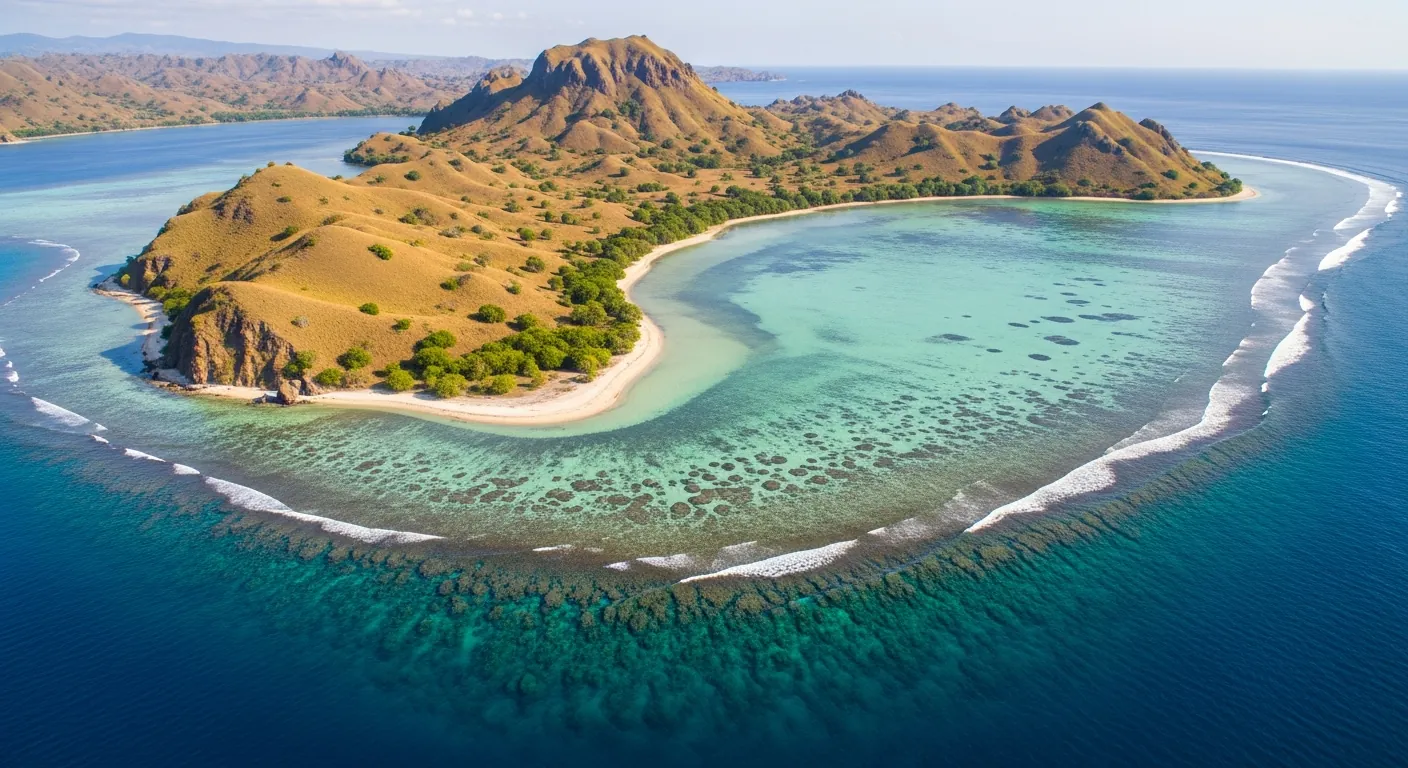
The sun bleeds across the eastern horizon, painting the sky above Gili Banta in hues of violet and crimson. Below the surface, currents begin their daily pulse, drawing nutrient-rich waters through volcanic topography. This island, an ecological outpost, presents a distinct frontier for those drawn to the Lesser Sunda Islands’ marine life.
Gili Banta: An Island Defined by Ocean Currents
Gili Banta, a sentinel in the Bima Regency, West Nusa Tenggara, Indonesia, offers an independent diving and snorkeling experience beyond the established routes. The island itself covers an area of approximately 25 to 26.6 square kilometres, a substantial landmass rising from the depths. Its highest point reaches an elevation of about 368 metres above sea level, providing a dramatic backdrop to the surrounding marine environment. The climate here is savanna, characterized by an average annual temperature of approximately 25 degrees Celsius. Average yearly rainfall totals roughly 1,844 millimetres, contributing to the island’s sparse, arid terrestrial landscape. Coordinates locate Gili Banta at about 8.4309° south latitude and 119.2914° east longitude, positioning it strategically for nutrient upwellings and diverse marine life. Wikidata, however, records a specific elevation of 150 metres above sea level at its referenced coordinate point, indicating varied topography. This geographical isolation and unique climate contribute to the distinct underwater conditions that attract divers.
Geographical Context and Marine Significance
Positioned east of Komodo National Park, Gili Banta acts as a crucial waypoint for marine species migrating through the Indonesian archipelago. The island’s proximity to deeper waters and its exposure to open ocean currents create dynamic conditions. These currents, often strong, are a defining characteristic of diving in the region, bringing in large pelagic species such as reef sharks, manta rays, and various schooling fish. The underwater topography around Gili Banta features dramatic drop-offs, pinnacles, and sloping reefs, sculpted by millennia of volcanic activity and ocean forces. Visibility can range from 15 to 30 metres depending on the moon phase and tidal movements. These conditions demand experienced divers capable of drift diving techniques. The island is part of a broader volcanic arc, which contributes to the nutrient-rich waters that sustain its diverse ecosystems. Its remote nature means dive sites are typically less frequented, offering a sense of exploration.
Diving Gili Banta: Currents and Coral Gardens
Diving around Gili Banta presents a different challenge and reward compared to its western neighbor, Komodo. The currents are often more pronounced, a factor that influences dive planning and site selection. Sites like “The Aquarium” on the island’s northern side are renowned for their vibrant soft coral gardens and resident schools of fusiliers and snapper. Here, divers can expect to see intricate reef structures at depths ranging from 5 to 25 metres. Another prominent site, “GPS Point,” to the south-east, is an underwater seamount that acts as a magnet for pelagic action. This site can experience strong down currents and requires careful monitoring of conditions. Divers frequently encounter white-tip reef sharks, grey reef sharks, and occasional hammerheads here. Water temperatures generally hover between 26 and 29 degrees Celsius, suitable for extended bottom times. The hard coral formations often dominate the shallower areas, providing shelter for myriad reef fish, while deeper sections reveal gorgonian fans and barrel sponges. The diversity of both macro and pelagic life makes Gili Banta a compelling destination for advanced divers.
Snorkeling Opportunities: Shallow Reefs and Clear Waters
While Gili Banta is celebrated for its diving, its shallower reefs offer exceptional snorkeling experiences. Protected bays and fringing reefs provide calmer conditions, allowing snorkelers to observe a wide variety of marine life from the surface. The eastern side of the island, particularly around its numerous small coves, offers accessible entry points to healthy coral ecosystems. Here, snorkelers can spot parrotfish, angelfish, butterflyfish, and various species of anemonefish within depths of 1 to 10 metres. Visibility in these sheltered areas can exceed 20 metres on calm days. Sea turtles, including green and hawksbill turtles, are frequently observed grazing on seagrass beds or resting on coral bommies. The absence of human habitation on the island means minimal pollution and undisturbed marine environments. Day-trippers from Labuan Bajo or Sape often combine snorkeling with beach excursions on Gili Banta’s pristine shores. The average depth for prime snorkeling areas is around 3-5 metres, making it suitable for all skill levels comfortable in open water.
Accessing Gili Banta: Liveaboards and Day Trips
Access to Gili Banta is primarily facilitated by liveaboard vessels operating out of Labuan Bajo, the main gateway to Komodo National Park. These liveaboards often extend their itineraries eastward, offering multi-day trips that encompass both Komodo and Gili Banta. Such expeditions typically last between 7 to 10 days, providing ample time to explore numerous dive sites. For day-trippers, options exist from both Labuan Bajo and Sape, a port town on the eastern coast of Sumbawa. Travel time from Labuan Bajo by speedboat can be approximately 2.5 to 3 hours, depending on sea conditions. From Sape, the journey is shorter, often around 1.5 to 2 hours. These day trips typically include 2-3 dives or snorkel sessions, along with lunch onboard. Independent operators or charter boats can also be arranged, though this is often more costly. The peak dive season for the region generally runs from April to November, coinciding with drier weather and calmer seas, though diving is possible year-round.
Marine Life Encounters: From Macro to Pelagic
Gili Banta’s position at the confluence of major oceanographic currents makes it a hotspot for diverse marine life, appealing to both macro enthusiasts and those seeking pelagic encounters. The deeper, current-swept sites are prime locations for observing large schooling fish such as barracuda and jacks, often numbering in the hundreds. Manta rays are regularly sighted, particularly during periods of strong current, feeding on plankton-rich waters. Reef sharks, including grey reef sharks and white-tip reef sharks, patrol the reef edges and deeper channels. For macro photographers, the protected bays and shallower reefs reveal a world of smaller creatures: pygmy seahorses clinging to gorgonian fans, various species of nudibranchs, and a multitude of crustacean life. The coral health supports a complex food web, from the smallest invertebrates to apex predators. The sheer biomass of fish life is a sign of the productivity of these waters, a direct result of the strong currents delivering a constant supply of nutrients. Species identification is a constant activity, with new discoveries frequently made by observant divers.
Environmental Stewardship and Future Outlook
The pristine nature of Gili Banta is largely due to its uninhabited status and the relatively low volume of visitors compared to more established dive destinations. Maintaining this ecological integrity is paramount for its long-term viability as a premier diving and snorkeling location. Responsible tourism practices are crucial, including adherence to no-touch policies, proper waste management by liveaboard operators, and respectful interaction with marine life. While Gili Banta falls within the broader Bima Regency, it does not currently have the same protected status as parts of Komodo National Park. However, local operators and conservation groups understand the value of its undisturbed ecosystems. Continued monitoring of coral health and fish populations is essential. The unique blend of challenging drift dives, vibrant coral gardens, and pelagic action positions Gili Banta as a significant destination for discerning divers seeking an authentic Lesser Sunda Islands experience. Its remote appeal is a double-edged sword, offering solitude but also requiring a commitment to conservation from all who visit.
Learn more about the geography of Gili Banta and other islands of Indonesia. Dive into detailed records on Wikipedia and Wikidata for further information. For context on neighboring islands, consider Gili Motang.
Ready to explore the independent dive frontier? Discover more about Gili Banta and plan your next adventure at gilibanta.com.